Lawn Mowing in Chiswick

Keep your outdoor space neat, healthy and easy to enjoy with lawn mowing in Chiswick for domestic gardens, shared grounds and small business plots. Our work focuses on the practical side of lawn care: cutting grass to an even finish, managing edging, and helping the turf stay tidy through the growing season. When grass is trimmed at the right height and with the right frequency, it looks better and is usually easier to maintain between visits.
We provide a straightforward service built around the condition of the lawn and the shape of the site. That can include regular mowing, careful trimming around borders, and attention to awkward areas where a mower cannot easily reach. If you are comparing options, it may help to think about the finish you want as well as how often the grass grows, because both affect the best approach. For people seeking a broader package, our garden maintenance and services overview pages can help you understand how the work fits alongside other outside tasks.
Use this page to see what the service can cover and when a quote is worth requesting. If your lawn has become uneven, overgrown or simply difficult to keep on top of, we can discuss the most suitable mowing pattern and the level of detail needed around edges, paths and planted areas. You can also request a quotation once you are ready to compare the work required.
Regular mowing for neat, even lawns
Regular mowing is the core of most lawn care plans. A consistent cut helps maintain a cleaner appearance and avoids the sharp change in height that can happen when grass is left too long. It also gives a better base for later seasonal work, because the lawn is easier to assess when the surface is level and visible. In many gardens, the difference between occasional cutting and planned maintenance is most obvious along the edges and around features such as patios, sheds and beds.
Where a site is set out with narrow borders, curved paths or decorative planting, mowing needs a slightly more measured approach. Good results usually depend on steady cutting rather than rushing through the job, especially when there are ornaments, stepping stones or delicate boundary lines to work around. We can keep the finish consistent across the main lawn while taking care of the details that make the garden look properly maintained, not just recently cut.
Helpful decisions often come down to the grass itself. A dry, fine lawn can usually be cut in a different way from a thicker, uneven surface that has been left longer between visits. The correct height, the choice of pattern and the handling of clippings all matter. For some lawns, a lighter tidy-up is enough; for others, a more deliberate first cut followed by regular visits produces the better result. Pricing and quotes can also be discussed once the work has been assessed.
Attention to edges, borders and awkward areas

Finishing work often makes the biggest visual difference after the main mowing is complete. Edges along paving, fence lines and planted borders can become untidy even when the central lawn still looks acceptable. Careful trimming in those areas helps the garden look deliberate and well kept. It can also stop grass from spilling over onto paths or into beds, which makes subsequent maintenance simpler and more effective.
Some gardens contain sections that are not easy to mow in a single pass. Tight corners, slopes, narrow side returns and areas around trees can all need extra judgement. Rather than forcing a standard cut over every part of the site, we can adapt the approach to suit the space. That might mean using different equipment in smaller spaces, taking more time around a boundary, or completing a tidy finish by hand where precision matters more than speed.
For lawns that sit beneath trees or alongside mixed planting, the surrounding layout matters as much as the grass itself. A sensible mowing plan will respect roots, retain access and avoid unnecessary disturbance to nearby features. If you are also considering broader changes outdoors, you may find the landscape gardening and landscaping pages useful for understanding how mowing fits within wider garden work.
Managing overgrown grass and first cuts
Not every lawn begins with a light trim. Some need a more careful recovery cut after a period of rapid growth, holiday absence or changing weather. In those cases, the task is usually to reduce the height gradually and avoid stressing the grass. Cutting too low in one visit can leave the lawn thin or patchy, so a more controlled method is often the better choice. That applies whether the garden is compact or has a larger open lawn.
When grass is overgrown, the visible work may include clearing away cut material, dealing with fallen debris and making sure the finish is still even across the site. If the surface has become uneven, the mowing pattern may need to be adjusted to reduce scalping and keep the cut consistent. This is one of the main reasons a first visit can differ from later maintenance visits: the goal is not only to shorten the grass, but to bring the lawn back to a manageable condition.
In some cases, a site benefits from combining mowing with other garden tasks so that the result looks complete rather than half finished. Garden clearance may be relevant where the lawn is affected by leaf litter, trimmings or general outdoor debris, while hedge trimming can help restore a cleaner boundary line where fast-growing hedges cast shade or drop clippings onto the grass.
Garden layouts, access and lawn shape
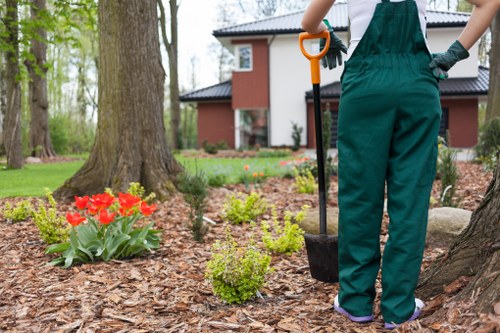
The shape of a lawn affects how the work is carried out. A simple rectangular area can usually be cut efficiently, while a garden with curves, islands, steps or split levels often needs a more thoughtful sequence. Good mowing is partly about order: choosing where to start, how to turn safely, and which section should be finished last so the result looks tidy from the main viewing areas. That practical planning is especially useful where the lawn connects to terraces, side entrances or front approaches.
Access also matters. Equipment must reach the grass without causing avoidable disturbance to paved areas, planting or stored items. If gates are narrow, if there are changes in level, or if the garden has several separate sections, the work may take a little more care. For that reason, it is useful to be clear about any limitations before the job begins. A well prepared visit reduces repetition and helps the mowing stay focused on the actual lawn rather than unnecessary movement around the site.
When you are arranging a quotation, it helps to know whether the lawn is one open space or several connected pieces. You do not need a long explanation, but a clear description of the layout makes it easier to judge the likely work. If you want to make a broader request at the same time, our contact page can be used to start the conversation and ask for the service you need.
What a mowing visit can include
A mowing visit is usually more than a simple pass across the centre of the grass. Depending on the site, it may include setting the cut height appropriately, mowing the main area, trimming the edges and making sure the finish is presentable around fixed features. On many lawns, a tidy result depends on finishing the visible borders carefully, because those are the places people notice first when they look out from doors, windows or patios.
It can also be sensible to think about what else sits close to the lawn. Garden furniture, ornaments, children’s equipment and temporary items can affect how the work is planned, particularly if they sit near the grass line or make sections harder to reach. The aim is to leave the lawn looking neat without creating unnecessary disruption. Good mowing should fit the garden, not force the garden to fit the machinery.
Where related outdoor work is needed, a combined approach may be more efficient than arranging each task separately. For example, decking services can be useful if the lawn connects to a timber seating area, while tree lopping and removal may matter where tree cover affects light, shade or access around the grass. These pages can help you understand the wider setting before you ask for a quotation.
Seasonal growth and keeping the lawn manageable

Grass growth changes through the year, so lawn care is rarely a fixed one-off task. In stronger growing periods, the lawn may need more frequent cutting to stop it becoming coarse or uneven. At quieter times, the same garden may only need a lighter tidy. The right schedule depends on growth rate, weather, use and the finish you want to keep. A well judged pattern helps the grass remain manageable without overworking it.
Seasonal mowing decisions also affect the look of the whole garden. A lawn that is kept too long can begin to dominate the space, while a lawn that is cut too harshly may lose fullness. A balanced approach is usually best. It allows the grass to recover between cuts and keeps the surface looking more natural. If your garden has mixed planting, it may also be sensible to keep the mowing line consistent so the lawn remains visually separate from borders and paths.
Two practical points are worth keeping in mind before you enquire:
- Know whether the main issue is general upkeep, a one-off recovery cut or a regular mowing plan.
- Be ready to mention anything that affects access, such as side gates, narrow passages or awkward levels.
About Chiswick
Chiswick is a district in West London on the north bank of the River Thames, within the London Borough of Hounslow. It developed from a historic village and retains a strong sense of older settlement patterns alongside later suburban growth. Chiswick High Road forms one of the area’s main routes, linking shops, cafés and local services with residential streets that branch away towards the river and the District line. The area includes a mixture of terraced houses, mansion blocks, purpose-built flats and detached homes, with architecture ranging from Georgian and Victorian buildings to later twentieth-century developments. One of its best-known historic properties is Chiswick House, an influential Palladian villa set in landscaped grounds. Close by, the riverside offers a different character, with promenades, moorings and stretches of open water that have long shaped the district’s identity. Chiswick Mall and the surrounding riverfront retain a quieter, older atmosphere, while nearby green spaces such as Dukes Meadows and Chiswick House and Gardens provide public open areas for leisure and walking. The district is also associated with broadcasting, design, and cultural activity, and it has a reputation for lively local dining and independent shops along the high road and side streets. Transport links, including Tube stations and main roads, connect the area with the wider city, yet Chiswick still keeps a distinct neighbourhood feel rooted in its riverside setting and long history of change.
Preparing for a quote

When you are ready to ask for a quotation, the most useful information is usually the simplest. A brief description of the lawn, its general size, and whether the job is regular or occasional will help set expectations. If you have more than one grass area, say so. If there are access points, slopes, boundaries or fixed obstacles, mention them as well. That is often enough to make the first conversation productive without turning it into a long questionnaire.
It can also help to think about the finish you want from the outset. Some customers want a straightforward tidy cut, while others prefer a more polished presentation with clear edges and a sharper look around paths and planting. Either way, the quote should reflect the actual task rather than a generic description. If the lawn has other work around it, such as nearby hedges, borders or trees, you can mention that too so the scope is understood correctly.
To get started, keep your notes brief and clear, then request a quotation when you are ready. If you would like to compare the service with related garden work first, the about us page gives a little more background on the business, while the pricing and quotes page can help you think through the next step. Either way, our aim is to make lawn mowing in Chiswick straightforward to arrange and easy to understand.
Why a tidy lawn finish matters
A well kept lawn is often the part of the garden that ties everything together. Even where planting and paving are attractive, untidy grass can make the whole space feel less orderly. That is why mowing is not just about shortening the lawn; it is about improving the overall presentation of the outdoor area. When the cut is even and the edges are controlled, paths, beds and seating spaces usually stand out more clearly.
There is also a practical side to presentation. Grass that is kept manageable is easier to inspect, easier to edge and easier to combine with other garden tasks. If the lawn is part of a larger maintenance routine, the mowing can support everything else by keeping the space accessible and reducing build-up around the borders. In that sense, the service is often the foundation of a broader seasonal plan rather than a standalone chore.
For gardens that need more than mowing alone, related services can be planned around the same outdoor space. Landscape gardening may be relevant where the layout is being changed, while garden maintenance suits people who want regular help keeping the whole area in shape. If you are ready to move forward, a brief enquiry is enough to begin.